

To
round off this year's hiking, here is a mountain which will be
familiar to anyone connected with Chichibu. Bukō-san (武甲山)
stands at 1304 metres high, towering over Chichibu
town independent of all other mountains. Its northern face has been
completely carved out into terraces, making it instantly
recognisable.
From these terraces come limestone
which dates back 200 million years, and which over the last 100 has
been quarried at an escalating rate on account of its service as a
key ingredient in cement. More specifically, it is this cement that
has fed the eruptive growth of the thousands of roads, apartments and
skyscrapers of Tokyo, first during the Taisho period (1912-26) but
most dramatically following the post-World War II economic explosion.
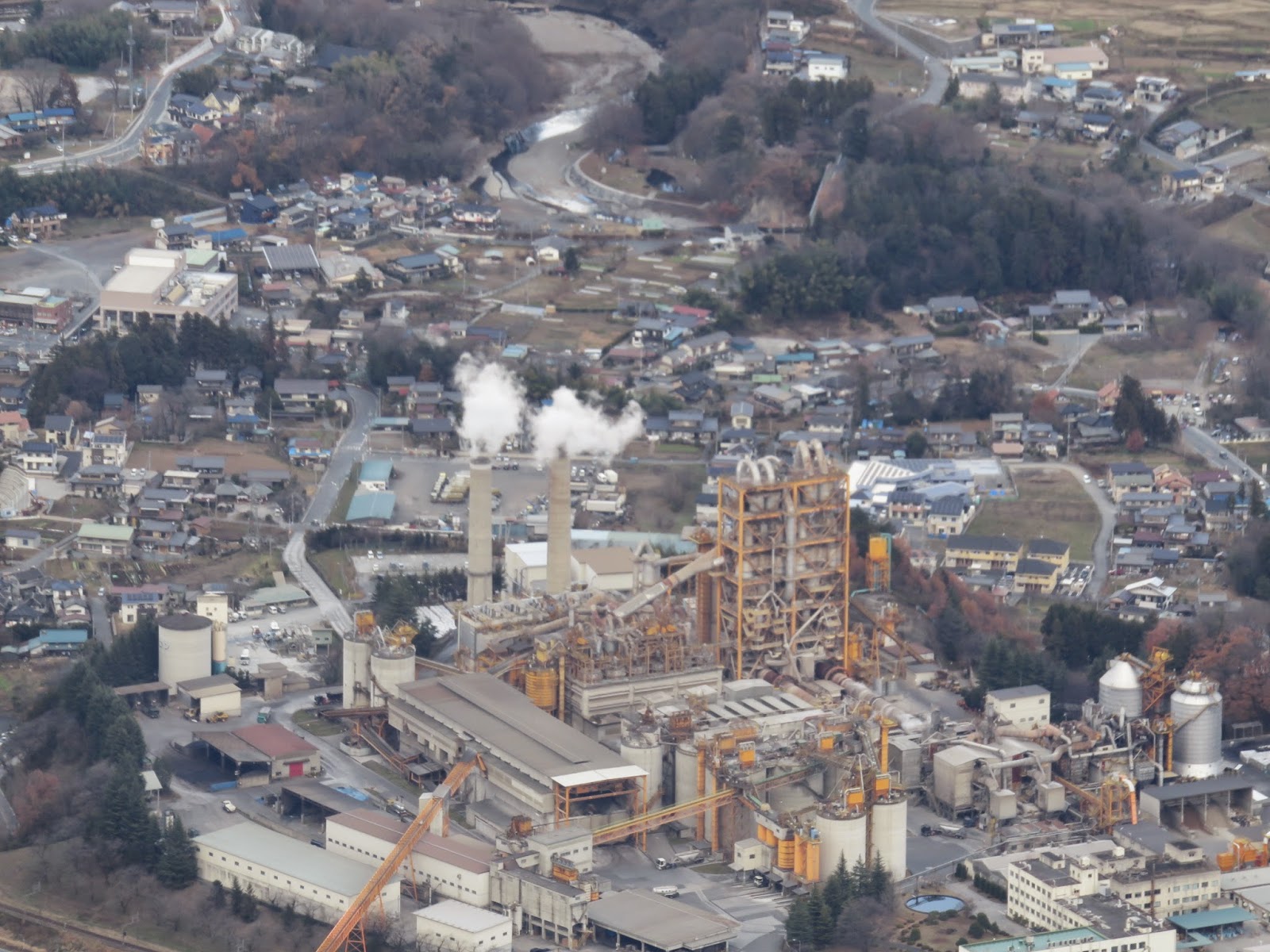

Limestone from the quarries is
transported to the many concrete plants that have sprung up below,
evidently centrepieces in the local economy, and there it is
processed to feed the Tokyo construction industry.
Perhaps
surprisingly, this has not reduced the mountain to some devastated,
mined-out wasteland. On the contrary, the southern flanks offer an
refreshing hiking experience where aside from the odd industrial
siren, the quarries rarely intrude on your day. Admittedly demand for
wood has done to the south what demand for concrete has done to the
north: much of Bukō-san's forest is young sugi
plantation rather than true wild woods. That said, these forests
tingle with the whispers of sacred sites and secrets from a
mysterious, more spiritual era gone by; at the large shrine on the
summit, for example, the evidence of devout observances goes back
centuries. And at the peak, if you plan well enough to make it there
on a clear day, there unfolds a glorious mountainscape that surely
ranks among the finest views in the region.


This walk is just over 9km long,
takes about 4-5 hours, and is a navigationally straightforward
up-and-then-down concern. There is no major technical challenge, but
it can get rather steep in places and presents a good workout for
anyone of reasonable fitness.
To
get there, take the Seibu
Ikebukuro Line to
Hannō
(飯能),
where you can change on the same platform to the Seibu-Chichibu Line
as far as Seibu-Chichibu
(西武秩父)
station. From here, take a taxi for about 20 mins. (approx. 2500 yen)
to Ichi-no-torii
(一の鳥居),
on the east side of the mountain. (You can also get off the train one
stop earlier at Yokoze (横瀬)
station and walk, but this takes an extra two hours along a road in
frequent use, not least by trucks trundling in and out of the
concrete plants on the way.) You'll finish on the west side at
Urayamaguchi
(浦山口)
station on the Chichibu Main Line; note that this line does not
accept PASMO or SUICA cards.
As an aside, like most walks in this
part of Saitama, you will pass Musashi-Yokote station on the way. By
means of a platform sign it proudly declares itself “the station
with goats", so be sure to look out of the window for reference.
 |
| “House of Goats”. |


